Adda is a slow coffee house by Gulshan Lake, designed and built end to end to show what a café website in Bangladesh should do: answer the questions customers actually ask, on the phone they are holding, in one tap.
About this projectAdda is not a real café. The name, menu, prices and events are illustrative and the photography is licensed stock. The design, the code and every feature are exactly what a client would get.
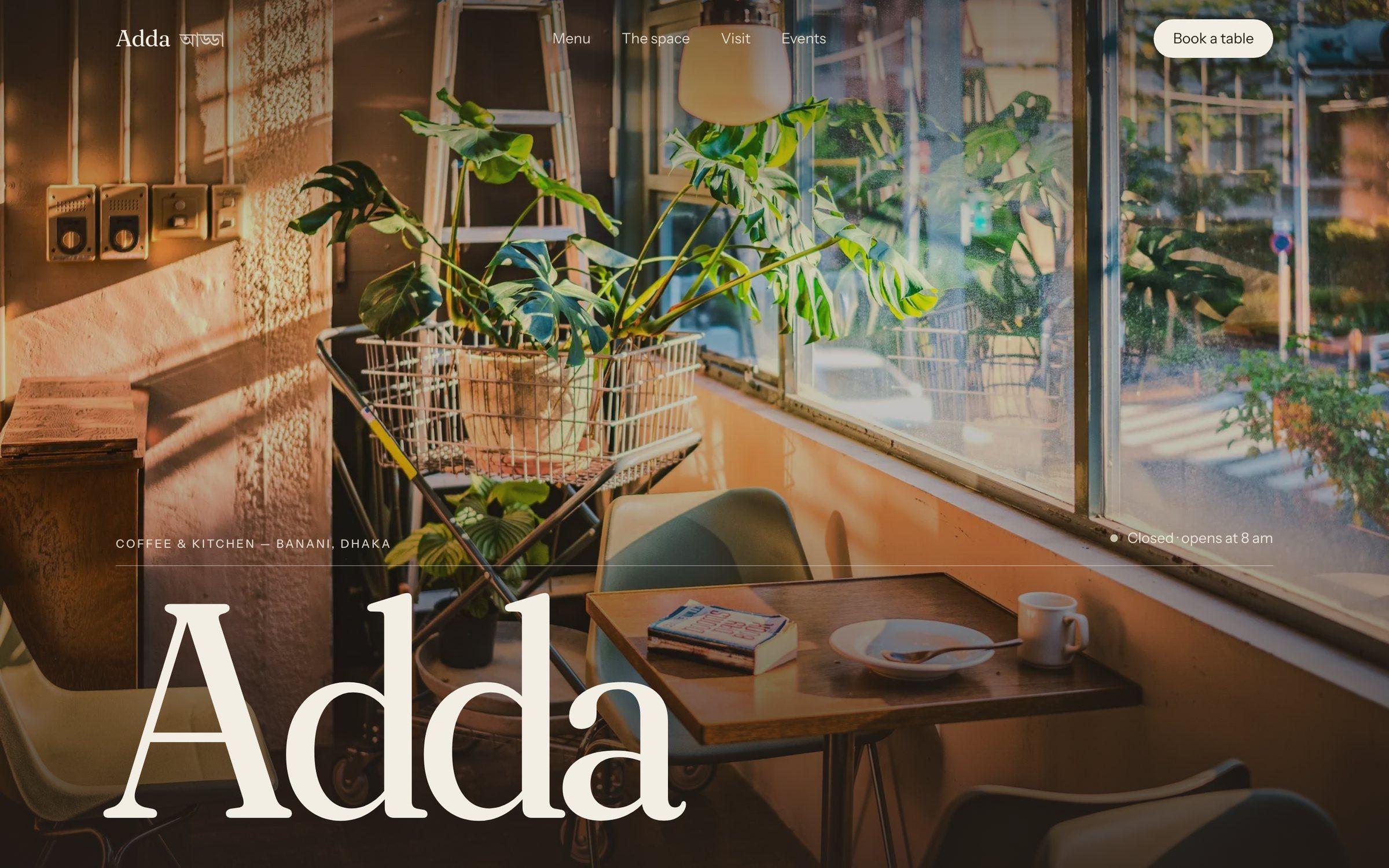
The brief
Most cafés and restaurants in Bangladesh live on Facebook. When we studied the websites that do exist, the same problems kept coming up: menus posted as images, opening hours that ignore Friday prayers, booking by phone call only, and pages hidden behind pop-ups.
Customers are on their phones, discover places on Facebook and Instagram, and book by calling or sending a WhatsApp message. The site had to fit that behaviour rather than fight it.
What we built
Every feature answers a question customers already ask — before they have to call.
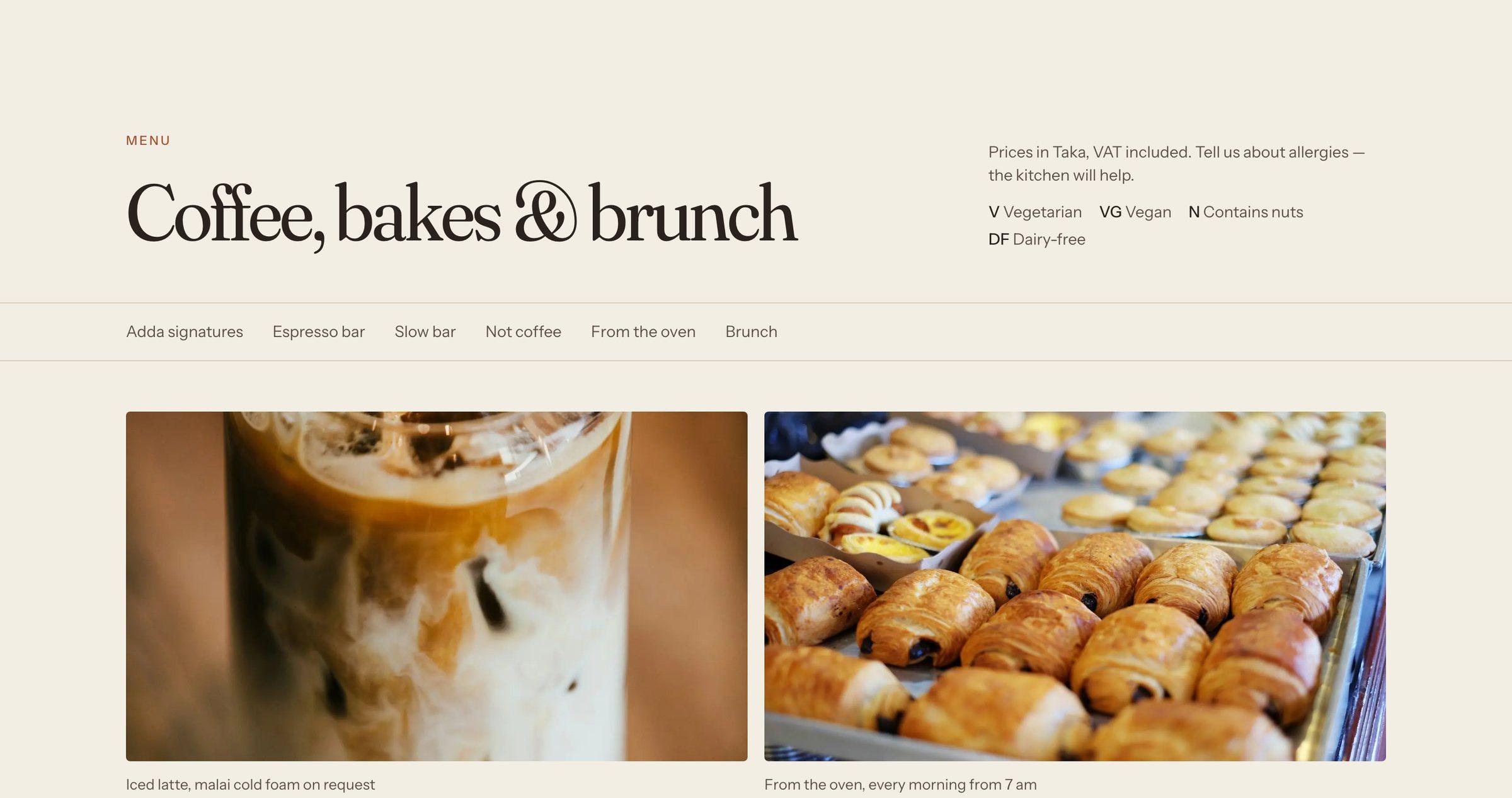
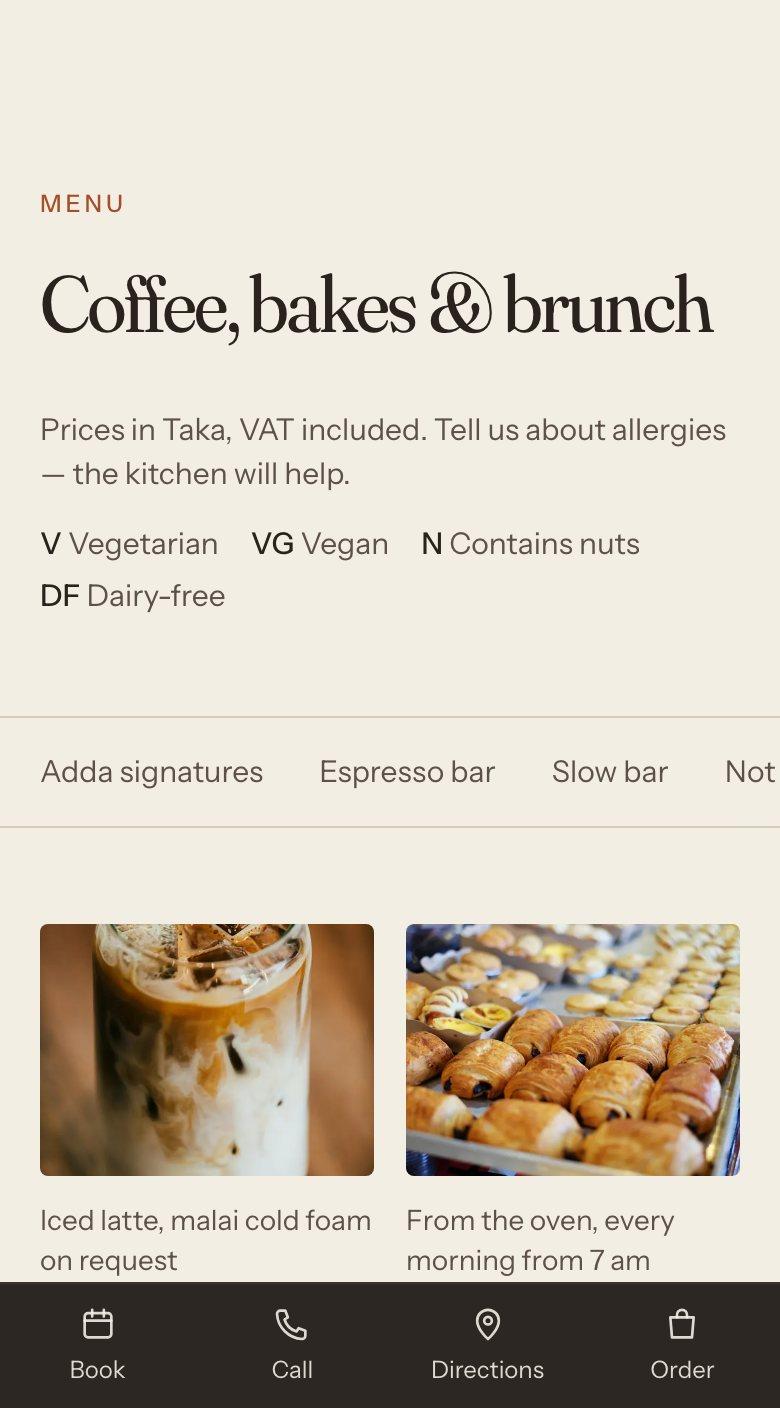
The whole menu is real text with prices in taka and dietary markers, so it is searchable, translatable and readable by Google. It follows the calendar too: khejur gur drinks appear from November to February, Himsagar mango from May to July.
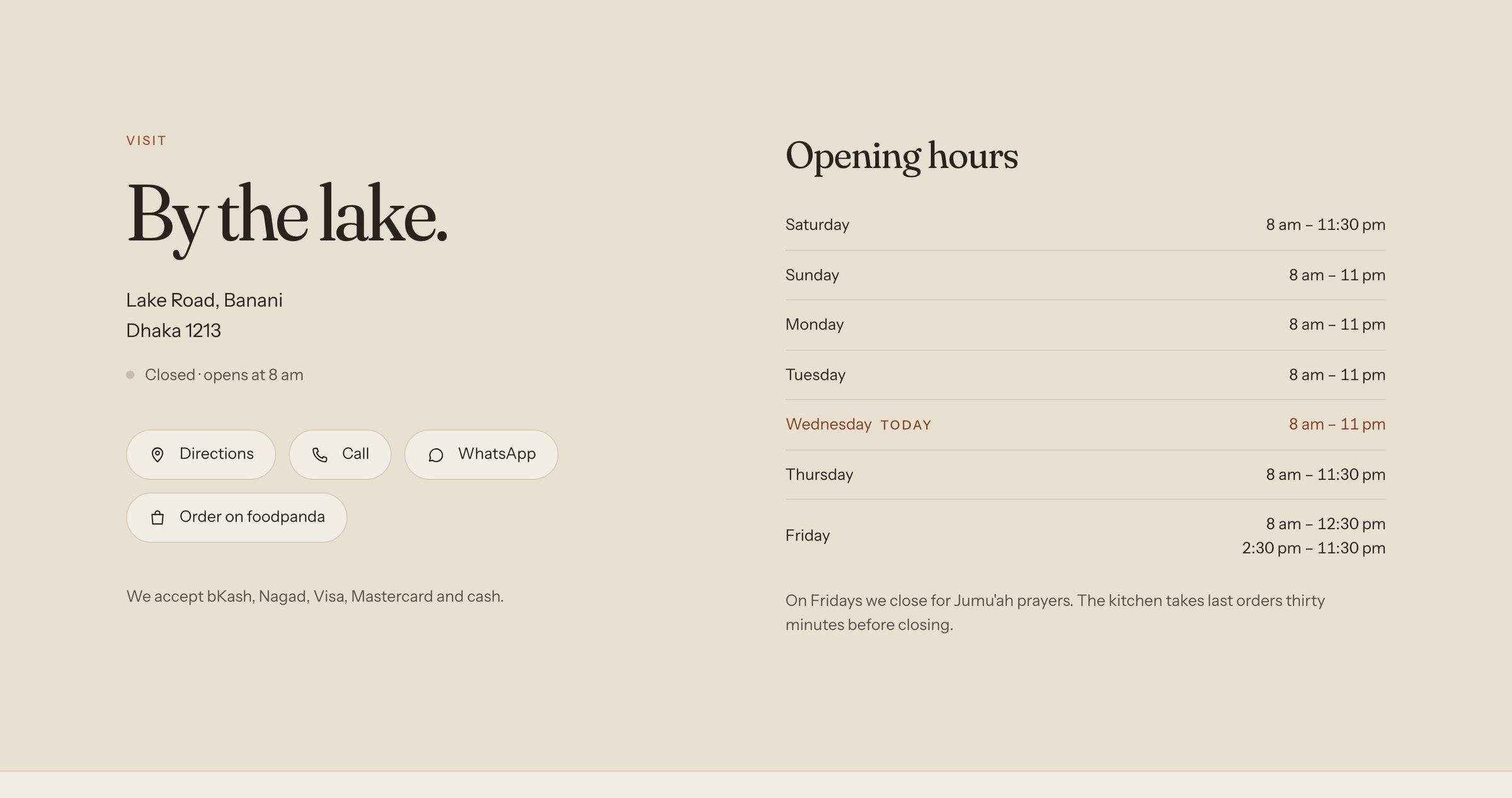
Opening hours are data, not a sentence. The site works out in Dhaka time whether the café is open right now, highlights today, and handles the Friday break for Jumu'ah prayers. Payment options — bKash, Nagad and cards — sit right beside them.
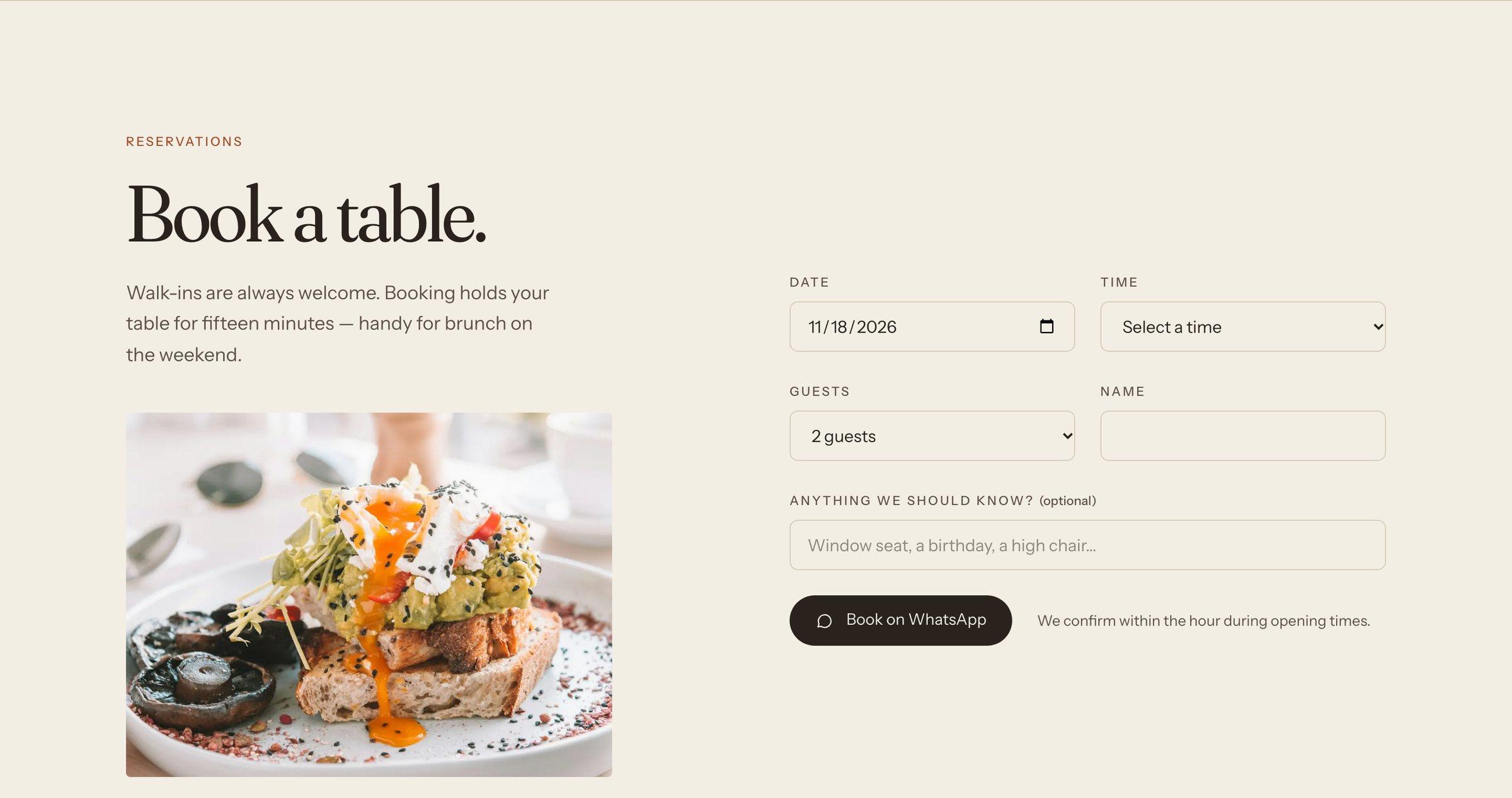
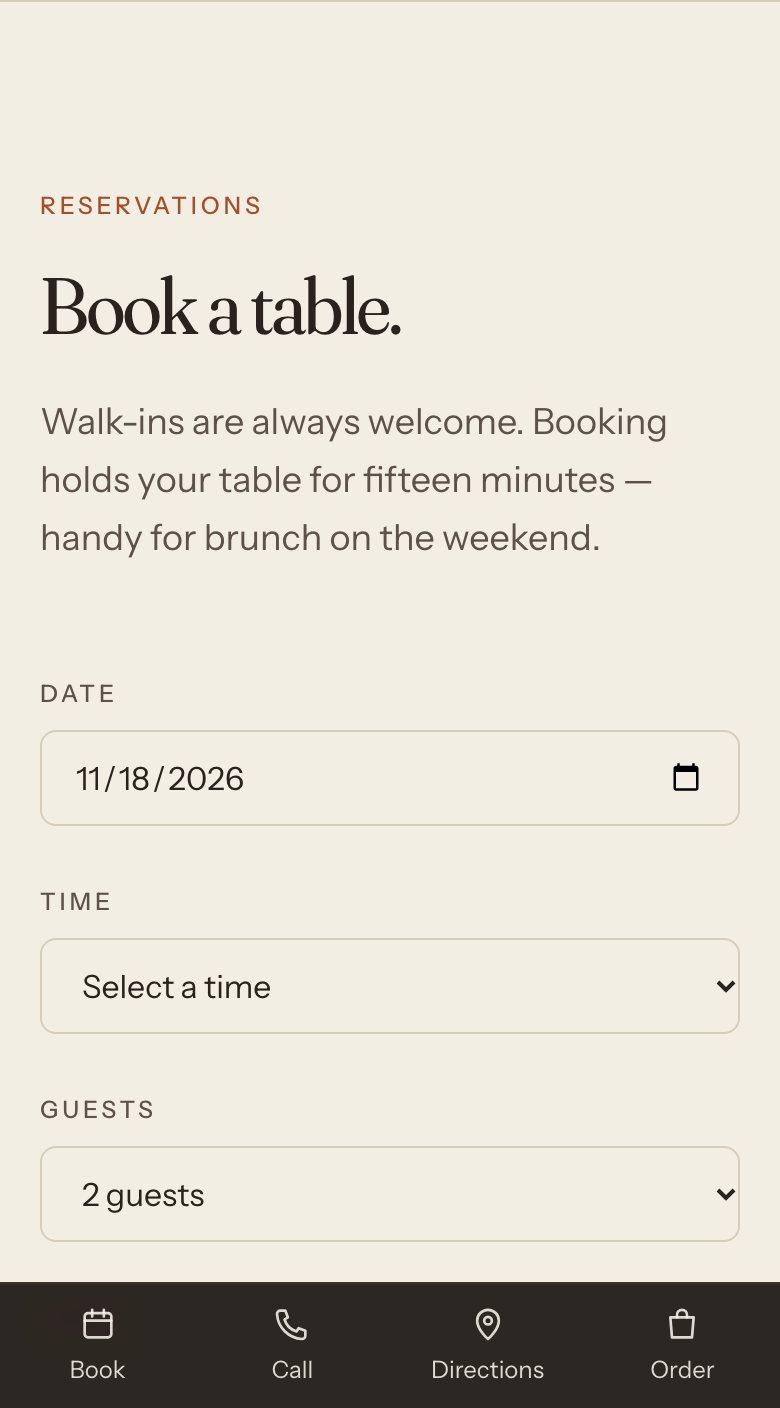
Guests choose a date, time and party size. Time slots come from the real opening hours — none during the Friday break, none in the last hour before closing — and the request opens in WhatsApp as a ready-written message the café can confirm in one reply.
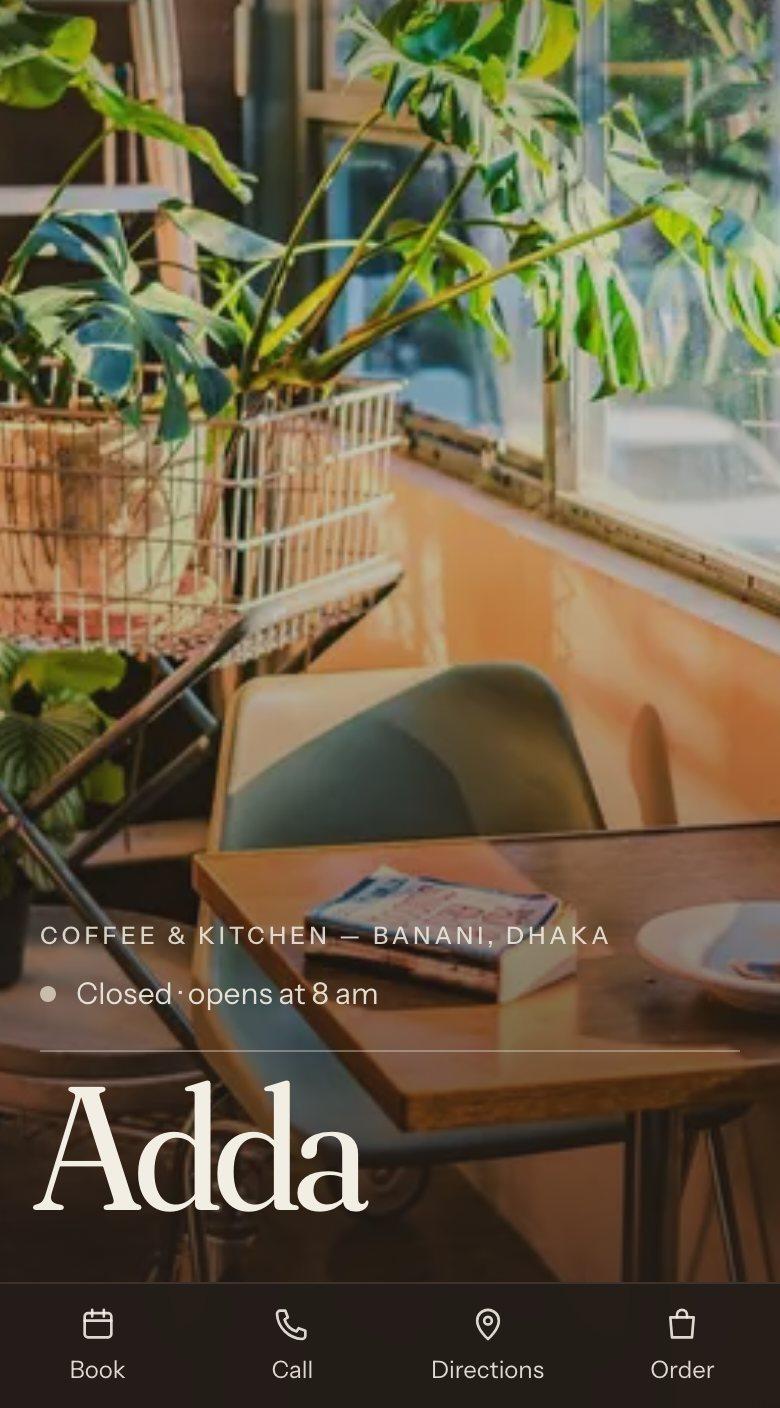
On phones, a fixed bar keeps the four things customers come for within thumb's reach, wherever they are on the page. Ordering goes to foodpanda, where Dhaka already orders.
Café structured data describes the address, location and opening hours for search engines, and a designed share image makes every link posted on Facebook or Messenger look intentional.
Pages are pre-rendered, photos are resized for each screen and there is no autoplay video, so the site stays light on a 4G connection.
On the phone
Most visitors arrive on a phone, often from a link someone shared. That's the screen we designed first.
Tell us about your business and how your customers find you. We'll show you what NeuralWebX would build — and what it would take.
